

How Custom Reusable Bags Support ESG & Sustainability Reporting for Retail Brands
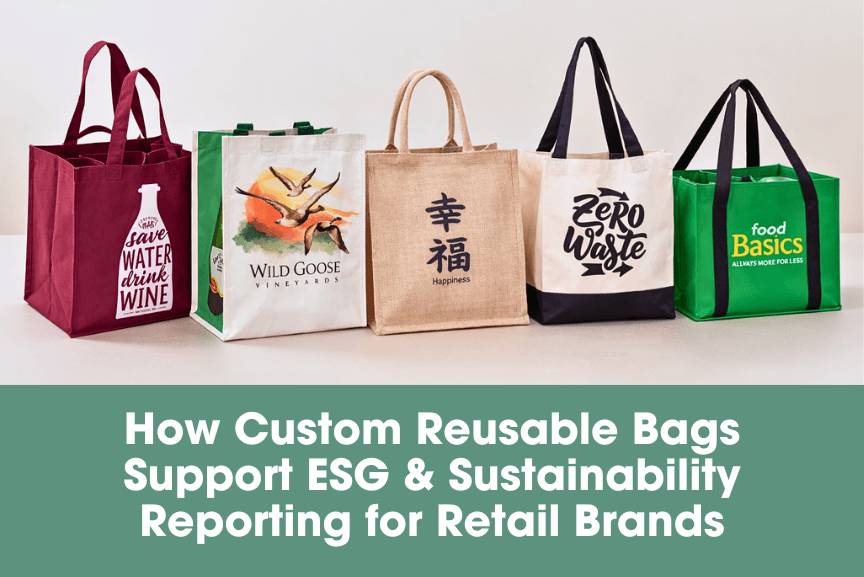
Lineup of reusable bags that support ESG and sustainability reporting for retailers
Reusable Bags That Turn Packaging Into Measurable ESG Impact
As ESG (Environmental, Social, and Governance) reporting becomes a core requirement for retail brands, packaging decisions are no longer operational—they’re strategic. Among sustainable retail packaging solutions, custom reusable bags stand out as one of the most measurable, visible, and reportable ESG investments a brand can make.
Why Reusable Bags Are an ESG Packaging Solution
Unlike single-use packaging, reusable bags deliver long-term environmental impact, consumer engagement, and clear data points—all critical for ESG disclosures, audits, and sustainability frameworks such as GRI, SASB, and CSRD.
1. Environmental Impact: Measurable Waste Reduction
Reusable bags directly support Environmental (E) goals by reducing reliance on single-use plastics and paper.
ESG reporting advantages:
Reduction in single-use packaging volume
Lower lifecycle emissions when bags are reused multiple times
Decreased landfill and ocean plastic leakage
Alignment with plastic reduction and waste diversion targets
Because reusable bags are designed for repeat use, they provide stronger lifecycle performance than most disposable packaging, making them easier to justify in ESG metrics and environmental impact statements.
2. Social Impact: Influencing Consumer Behavior at Scale
Reusable bags actively engage customers in sustainable behavior, supporting the Social (S) pillar of ESG.
Unique social benefits:
Encourages responsible consumption habits
Supports community sustainability initiatives and local regulations
Demonstrates brand commitment to environmental stewardship
Creates positive brand association at the point of sale and beyond
Unlike invisible sustainability initiatives, reusable bags are highly visible, reinforcing a brand’s values every time they’re reused in public.
3. Governance & Compliance: Strong Documentation and Traceability
From a Governance (G) perspective, custom reusable bags support transparency, traceability, and supplier accountability.
Governance advantages include:
Documented material sourcing and certifications
Compliance with regional plastic bans and extended producer responsibility (EPR) laws
Supplier audits and responsible manufacturing practices
Clear ESG documentation for investors, regulators, and stakeholders
Reusable bag programs can be easily integrated into procurement policies and ESG risk management frameworks.
4. Why Reusable Bags Are Unique in ESG Reporting
Reusable bags go beyond sustainability claims, they create tangible ESG assets.
What makes them different from other sustainable packaging:
Longevity: One bag replaces dozens (or hundreds) of single-use alternatives
Brand Visibility: ESG messaging travels with the consumer
Data-Friendly: Units distributed, reuse rates, and material composition are trackable
Customer Engagement: Sustainability becomes interactive, not abstract
Cost Efficiency Over Time: Lower long-term environmental and reputational risk
No other retail packaging solution combines measurable impact, consumer behavior change, and brand storytelling as effectively.
5. ESG Packaging That Supports Your Sustainability Narrative
For retail brands, ESG success depends on credible actions backed by evidence. Reusable bags:
Strengthen sustainability reports
Support Scope 3 reduction strategies
Help meet internal ESG KPIs
Provide clear proof points for annual reporting and marketing claims
They are not just packaging, they are reusable sustainability infrastructure.
Final Thought: From Packaging Choice to ESG Strategy





As ESG expectations grow, retail brands need solutions that are authentic, scalable, and defensible. Reusable bags deliver on all three, making them one of the most effective and unique ESG packaging solutions available today.
Looking to strengthen your ESG reporting with packaging that delivers real, measurable impact?
Partner with us to design custom reusable bag programs that align with your sustainability goals, regulatory requirements, and brand strategy.